





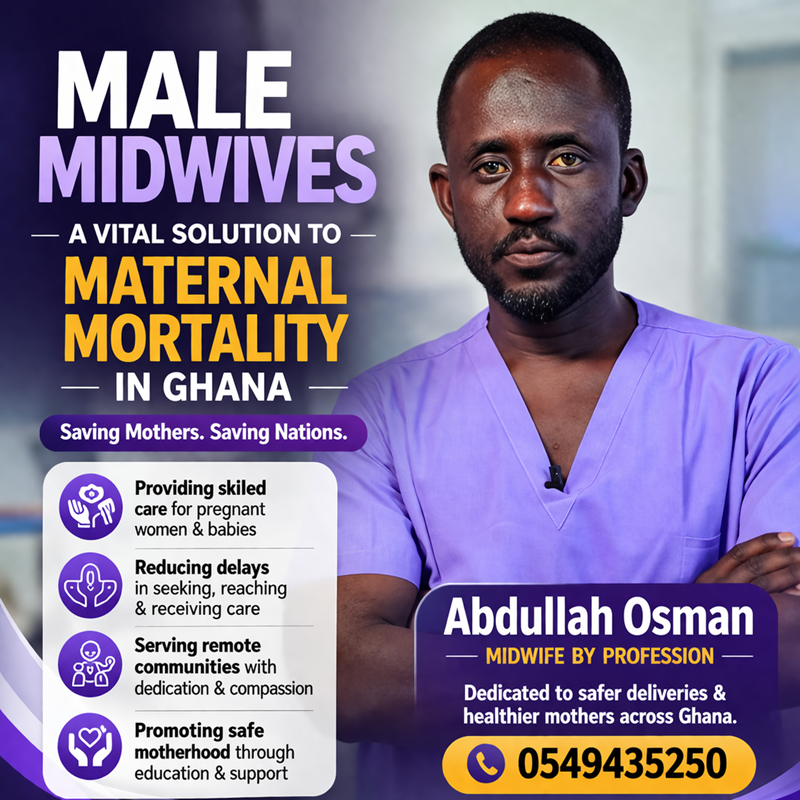
Male Midwives: A Powerful Solution to Maternal Mortality in Ghana By Abdullah Osman.
Introduction
In Ghana, maternal mortality remains a serious public health concern. As highlighted in the documentary, losing one woman during childbirth is like losing an entire nation. This reality continues to drive passionate healthcare professionals like Abdullah Osman, a dedicated midwife committed to saving the lives of pregnant women and their babies. His motivation is simple but powerful — no woman should lose her life while giving life.
The Role of Male Midwives in Ghana
Traditionally, midwifery in Ghana has been a female-dominated profession. However, experts like Professor Victoria Bam emphasize that male midwives can play a significant role in reducing maternal deaths. Recognizing this potential, the Ministry of Health introduced pilot programs to train male midwives, aiming to strengthen the healthcare system, especially in underserved communities.
Male midwives bring unique advantages, particularly in rural areas where access to healthcare is limited. Their ability to travel long distances, often by motorbike, allows them to reach pregnant women quickly, overcoming transportation challenges that frequently delay medical care.

Understanding the Three Delays Framework
A key concept discussed by health researchers is the “Three Delays Framework,” which explains why maternal deaths occur:
- First Delay: Lack of knowledge or awareness about pregnancy complications
- Second Delay: Difficulty in reaching healthcare facilities (transportation issues)
- Third Delay: Delays in receiving proper care at health facilities
Male midwives in Ghana actively help reduce all three delays. They educate families, provide immediate care in remote locations, and ensure timely referrals to healthcare facilities when complications arise.
Challenges in Rural Healthcare Delivery
Despite their impact, deploying healthcare professionals to rural areas remains a challenge. Many female midwives prefer urban postings due to family responsibilities and better social amenities. This creates a gap in maternal healthcare services in remote communities.
Male midwives help bridge this gap by willingly serving in these hard-to-reach areas. Their presence ensures that pregnant women receive essential care, even in the most isolated regions.
Voices Behind the Movement
Public health researcher Ramatu Abdul Hamid Al-Hassan and reproductive epidemiologist Dr. Martina Antakra highlight how the idea to study male midwives emerged. It was driven by real-life experiences, including advocacy from male midwives like George Inkit, who wanted to change public perception and prove that men can excel in this field.
Their research shows that male midwives are not only capable but are making a meaningful difference in maternal healthcare delivery across Ghana.
Why Policy Change is Needed
Experts strongly advocate for the reintroduction and expansion of male midwifery training programs in Ghana. By increasing the number of trained male midwives and deploying them strategically, especially in rural areas, the country can significantly reduce maternal mortality rates.
Continuous monitoring and evaluation of their contributions will also ensure that the healthcare system benefits fully from their inclusion.
Conclusion
Male midwives represent an untapped solution to one of Ghana’s most pressing health challenges. Their dedication, mobility, and willingness to serve in remote areas make them vital in the fight against maternal mortality.
Revisiting policies, investing in training, and supporting their deployment could transform maternal healthcare in Ghana — ensuring that no woman loses her life while giving birth.