



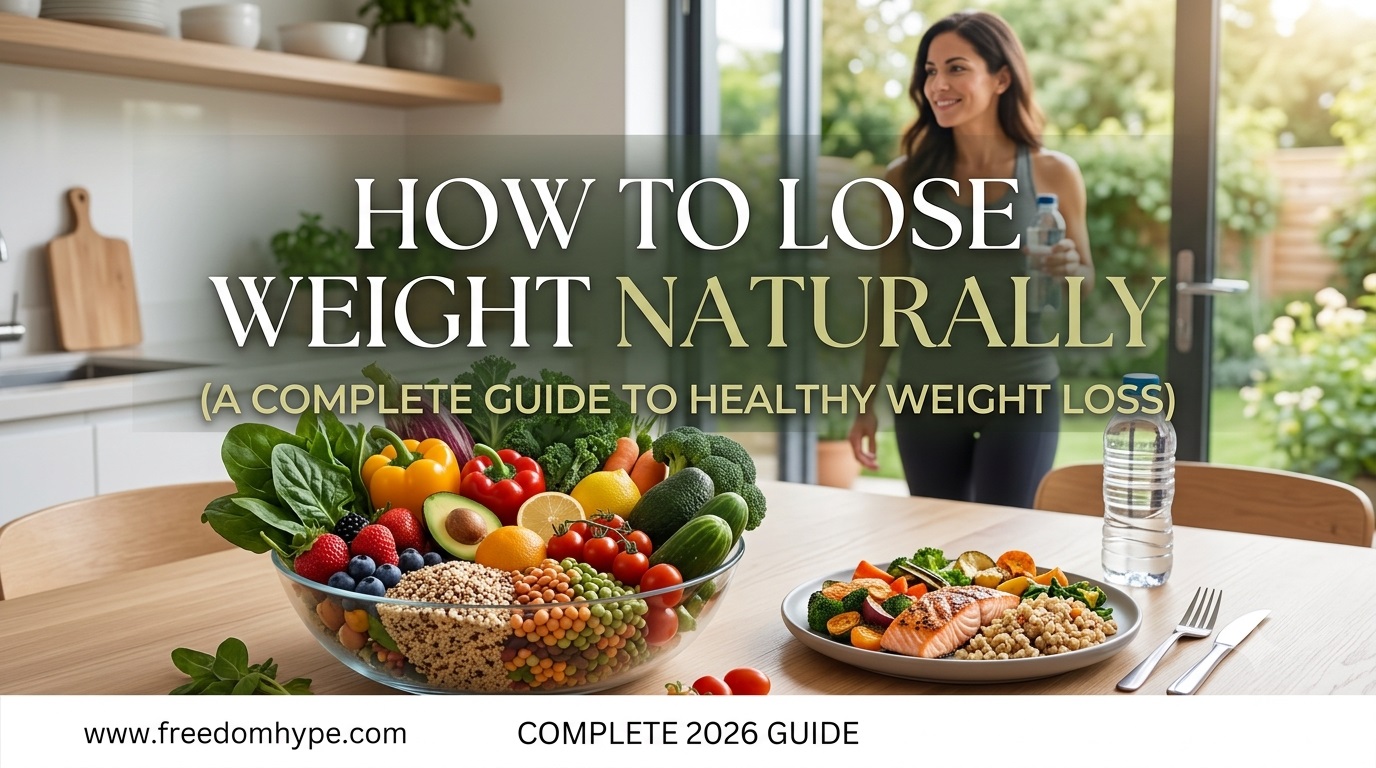
How to Lose Weight Naturally: A Complete Guide to Healthy Weight Loss
Introduction
Losing weight is one of the most common health goals worldwide. Whether you want to improve your health, boost your confidence, or reduce the risk of diseases such as diabetes and high blood pressure, healthy weight loss can make a significant difference.
Unfortunately, many people fall for quick-fix diets and miracle weight-loss products that promise instant results. The truth is that sustainable weight loss comes from healthy eating, regular physical activity, and positive lifestyle changes.
In this guide, you’ll learn safe, effective, and natural ways to lose weight and keep it off.

What Is Weight Loss?
Weight loss is the process of reducing body weight by burning more calories than you consume. A healthy approach focuses on losing excess body fat while maintaining muscle mass and overall health.
Healthy weight loss is gradual and sustainable rather than rapid and temporary.
Common Causes of Weight Gain
Several factors can contribute to weight gain, including:
- Eating too many high-calorie foods
- Drinking sugary beverages regularly
- Lack of physical activity
- Poor sleeping habits
- Stress and emotional eating
- Hormonal changes
- Certain medications
- Genetics
Understanding the cause of weight gain can help you choose the right strategy for losing weight.
Benefits of Losing Weight
Maintaining a healthy weight offers many health benefits, including:
- Lower risk of heart disease
- Reduced risk of type 2 diabetes
- Improved blood pressure
- Better sleep quality
- Increased energy levels
- Improved mobility
- Better mental well-being
- Increased confidence
Even a modest weight loss can improve your overall health.
10 Effective Ways to Lose Weight Naturally
1. Eat More Fruits and Vegetables
Fresh fruits and vegetables are rich in vitamins, minerals, and fiber while being relatively low in calories. They help you stay full for longer and support a healthy diet.
2. Reduce Sugar Intake
Excess sugar is a major contributor to weight gain. Reduce your intake of:
- Soft drinks
- Cakes
- Cookies
- Candy
- Sweetened beverages
Choose water or unsweetened drinks whenever possible.
3. Eat More Protein
Protein helps reduce hunger and supports muscle maintenance during weight loss.
Good protein sources include:
- Fish
- Eggs
- Beans
- Chicken
- Lean beef
- Groundnuts
- Soy products
4. Exercise Regularly
Physical activity helps burn calories and improves overall fitness.
Good options include:
- Walking
- Running
- Cycling
- Swimming
- Dancing
- Strength training
Aim for at least 150 minutes of moderate exercise each week.
5. Drink More Water
Drinking water before meals may help reduce calorie intake and support healthy digestion.
Replace sugary drinks with clean drinking water whenever possible.
6. Get Enough Sleep
Poor sleep affects hormones that regulate hunger, making you more likely to overeat.
Adults should aim for 7–9 hours of quality sleep each night.
7. Control Portion Sizes
You don’t always have to eliminate your favorite foods. Eating smaller portions can help reduce your calorie intake while still allowing you to enjoy a balanced diet.
8. Avoid Late-Night Snacking
Eating large meals or frequent snacks late at night may make it harder to manage your calorie intake.
Try to eat regular meals throughout the day instead.
9. Stay Consistent
Weight loss takes time. Focus on building healthy habits instead of expecting overnight results.
Small improvements every day often lead to lasting success.
10. Track Your Progress
Monitor your weight, waist measurements, activity levels, or healthy habits over time. Tracking progress can help keep you motivated and show that small changes are adding up.
Foods That Support Healthy Weight Loss
Consider including these foods in a balanced diet:
- Oats
- Brown rice
- Sweet potatoes
- Beans
- Fish
- Eggs
- Spinach
- Cabbage
- Tomatoes
- Apples
- Oranges
- Watermelon
- Avocados (in moderation)
Foods to Limit
Reduce foods that are high in added sugars, unhealthy fats, or calories, such as:
- Sugary drinks
- Fast food
- Fried foods
- Processed snacks
- Pastries
- Excess sweets
Enjoy these foods occasionally rather than making them everyday choices.
Common Weight Loss Mistakes
Avoid these common mistakes:
- Skipping meals
- Expecting instant results
- Following extreme diets
- Drinking too many sugary beverages
- Not exercising regularly
- Getting too little sleep
- Ignoring portion sizes
Frequently Asked Questions
How quickly can I lose weight?
Healthy weight loss is usually gradual. Many health professionals consider losing about 0.5–1 kilogram (1–2 pounds) per week a realistic and sustainable pace.
Can I lose weight without exercise?
Yes, improving your eating habits can lead to weight loss. However, combining healthy eating with regular physical activity generally provides better results and supports overall health.
Should I stop eating carbohydrates?
No. Carbohydrates can be part of a healthy diet. Focus on whole grains, fruits, vegetables, and appropriate portion sizes instead of eliminating all carbs.
Do weight-loss supplements work?
Some supplements are marketed for weight loss, but many have limited evidence of effectiveness and some may have side effects. Speak with a healthcare professional before using any supplement.
Conclusion
Healthy weight loss is not about starving yourself or following extreme diets. It is about making sustainable lifestyle changes that you can maintain over time.
Eat nutritious foods, stay physically active, get enough sleep, and be patient with your progress. Small, consistent changes can lead to long-term improvements in your health and well-being.
Start today by choosing one healthy habit to improve, and build from there.